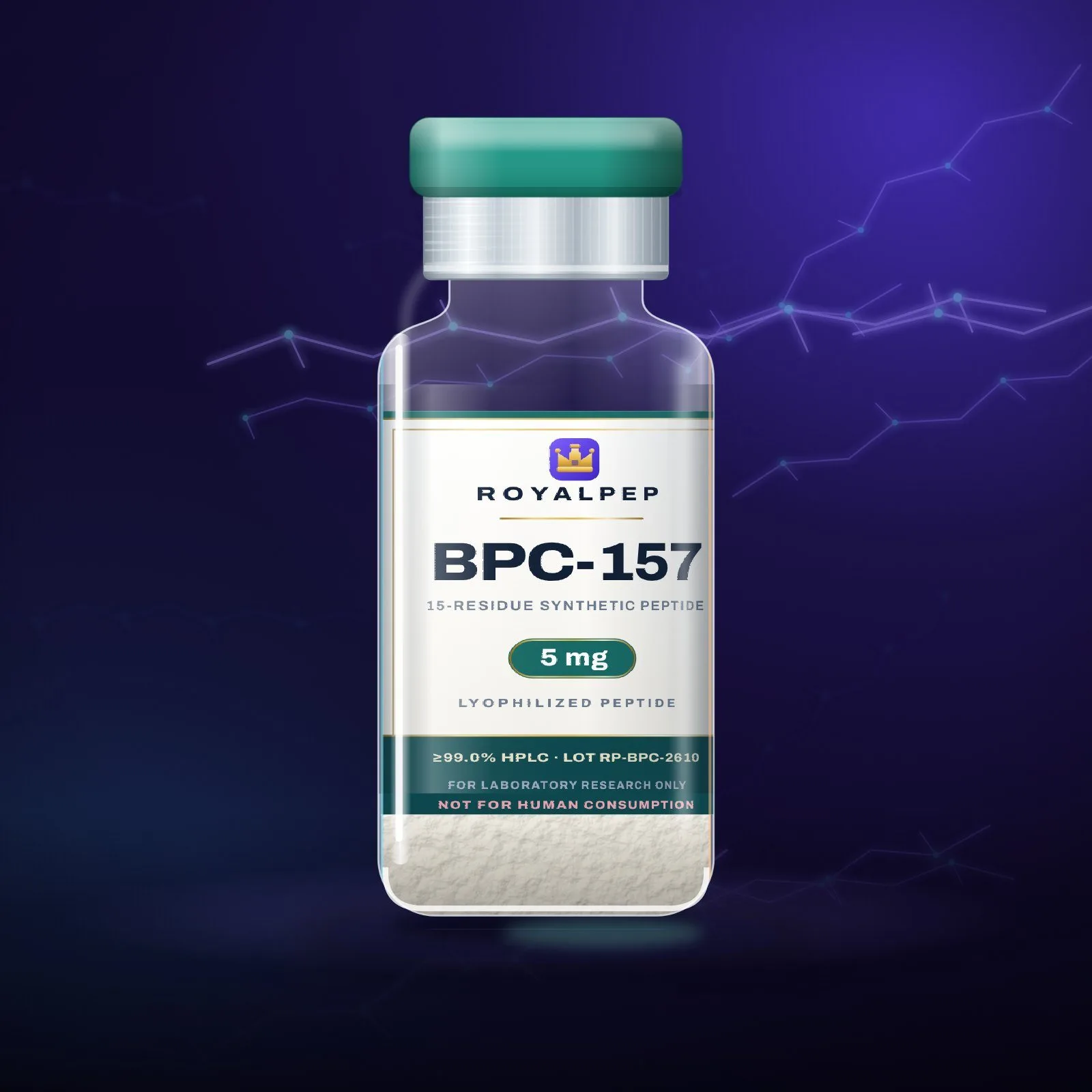
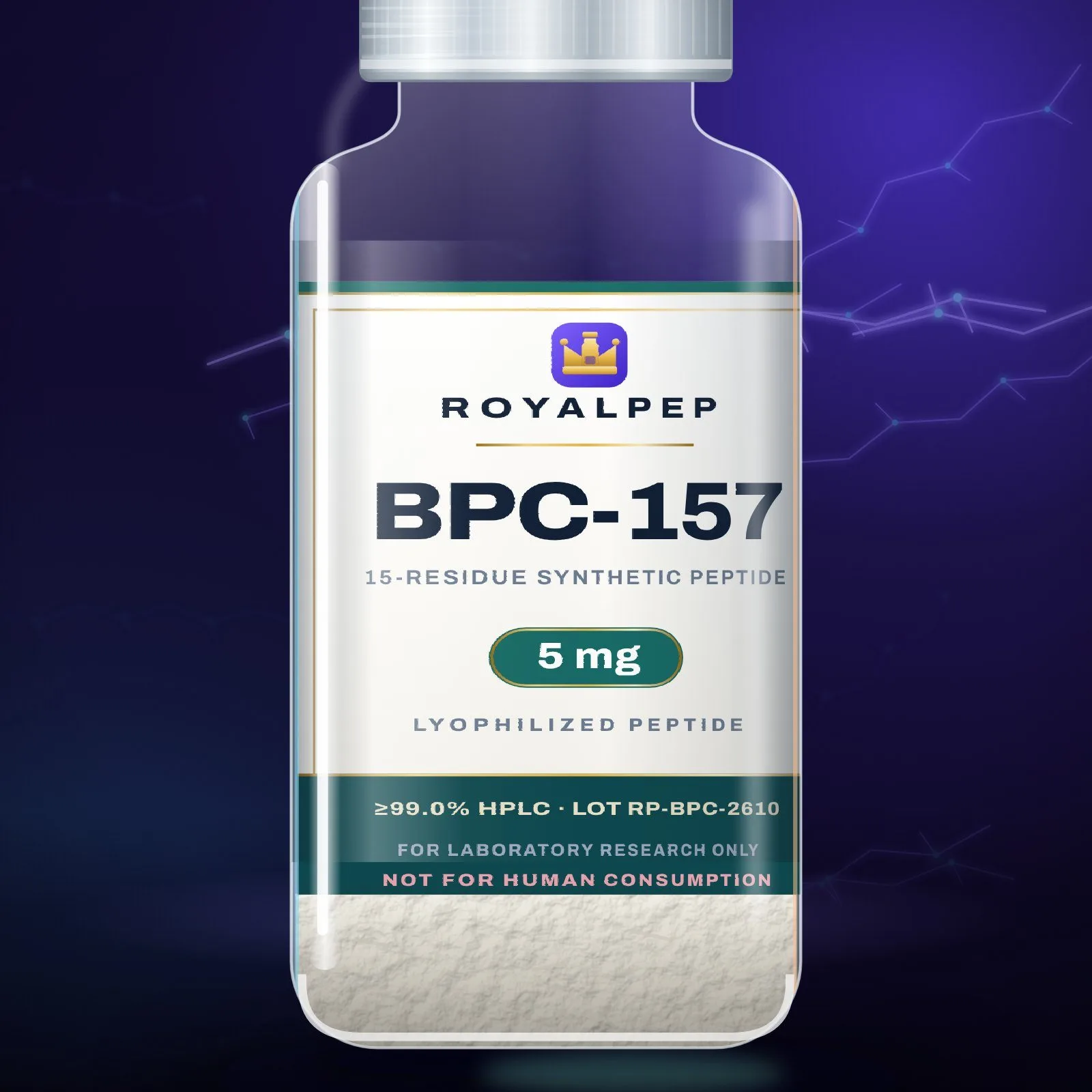
BPC-157
C62H98N16O221419.56 g/mol
From $48.00
Best value: $7.80 per mg
A 15-residue synthetic fragment of a gastric protein, widely studied in preclinical tissue-repair models.
Buy more, save more
Applies to any mix of sizes of this compound. Discount shows in your cart.
- Batch RP-BPC-2610, lab report sent on request
- Sealed vial, discreet unbranded packaging
- Order now and it ships on Monday
For in-vitro laboratory research only. Not for human or veterinary use.
Structure
- Hydrophobic
- Polar
- Acidic
- Basic
- Modified / non-standard
Specifications
| Also known as | Body Protection Compound-157, PL 14736 |
|---|---|
| Sequence | GEPPPGKPADDAGLV |
| Molecular formula | C62H98N16O22 |
| Molecular weight | 1419.56 g/mol |
| CAS number | 137525-51-0 |
| Purity specification | ≥99.0% (HPLC) |
| Form | Lyophilized powder, 3 mL glass vial |
| Storage | −20 °C, sealed, protected from light |
Stock solution calculator
Work out the concentration of an in-vitro stock solution from the vial contents and the solvent volume, using this compound’s molecular weight.
- Mass concentration
- –
- Molar concentration
- –
- Amount of substance
- –
Uses MW 1419.56 g/mol and gross fill weight. For quantitative work, correct for net peptide content.
Batch history
Every batch we have released for this compound, with the report for each. Older reports stay available so you can compare lots.
-
RP-BPC-2610 Shipping now
Request report
Research overview
BPC-157 is a synthetic pentadecapeptide whose sequence corresponds to a fragment of a protein originally isolated from gastric juice. It is stable in solution relative to many peptides of similar length, which is one reason it has been used so widely in laboratory work.
Published research has examined BPC-157 in rodent and cell-culture models of tendon, ligament, muscle and gastrointestinal tissue, with particular interest in angiogenesis, growth-factor receptor expression and the nitric oxide system. Much of the literature comes from a small number of research groups, and controlled human data remain limited.
Supplied as a lyophilized acetate salt. The net peptide content per vial is stated on the label.
Related products
-
Repair & Regeneration
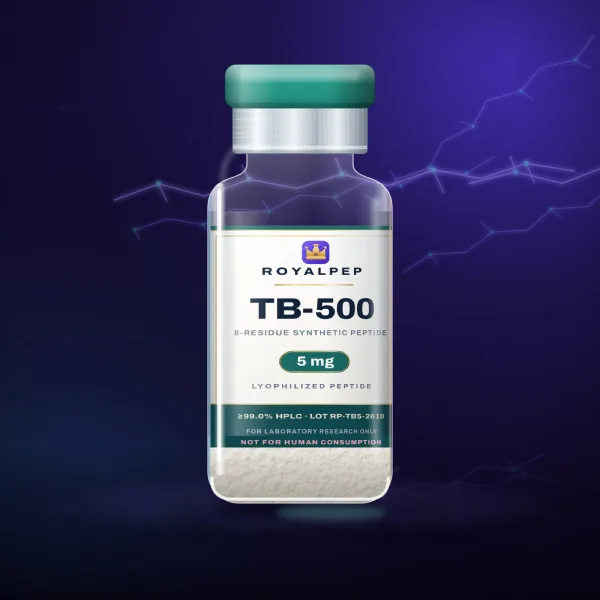
TB-500 (Thymosin β4 fragment)
5 mg10 mg
From $52.00 Choose size This product has multiple variants. The options may be chosen on the product page -
Repair & Regeneration
GHK-Cu
50 mg100 mg
From $42.00 Choose size This product has multiple variants. The options may be chosen on the product page