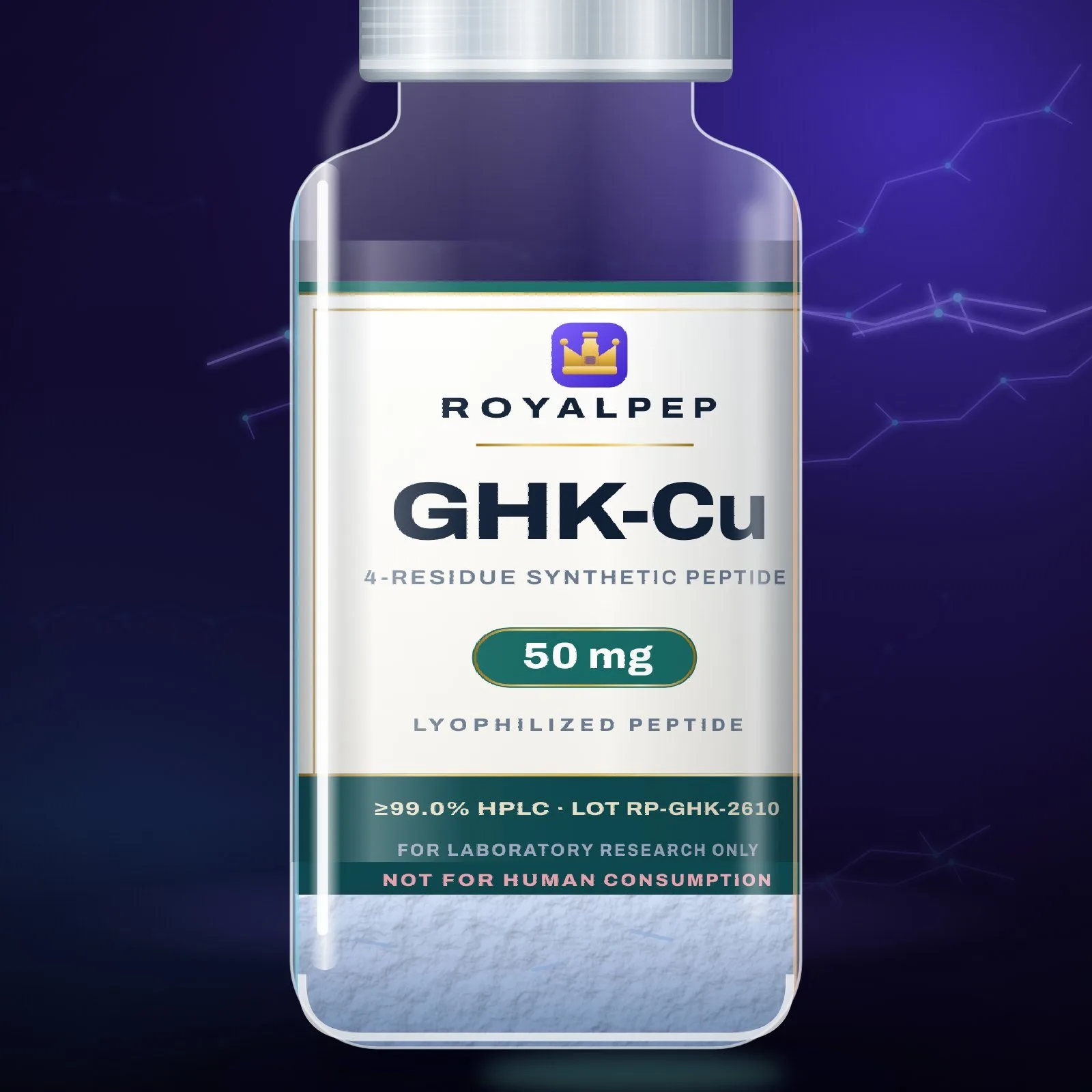
GHK-Cu
C14H22CuN6O4401.91 g/mol
From $42.00
Best value: $0.68 per mg
The copper(II) complex of the naturally occurring tripeptide glycyl-histidyl-lysine.
Buy more, save more
Applies to any mix of sizes of this compound. Discount shows in your cart.
- Batch RP-GHK-2610, lab report sent on request
- Sealed vial, discreet unbranded packaging
- Order now and it ships on Monday
For in-vitro laboratory research only. Not for human or veterinary use.
Structure
- Hydrophobic
- Polar
- Acidic
- Basic
- Modified / non-standard
Specifications
| Also known as | Copper tripeptide-1, Glycyl-L-histidyl-L-lysine copper |
|---|---|
| Sequence | Gly-His-Lys-Cu²⁺ Copper(II) complex |
| Molecular formula | C14H22CuN6O4 |
| Molecular weight | 401.91 g/mol |
| CAS number | 89030-95-5 |
| Purity specification | ≥99.0% (HPLC) |
| Form | Lyophilized powder, 3 mL glass vial |
| Storage | −20 °C, sealed, protected from light |
Stock solution calculator
Work out the concentration of an in-vitro stock solution from the vial contents and the solvent volume, using this compound’s molecular weight.
- Mass concentration
- –
- Molar concentration
- –
- Amount of substance
- –
Uses MW 401.91 g/mol and gross fill weight. For quantitative work, correct for net peptide content.
Batch history
Every batch we have released for this compound, with the report for each. Older reports stay available so you can compare lots.
-
RP-GHK-2610 Shipping now
Request report
Research overview
GHK is a tripeptide first isolated from human plasma in 1973. It binds copper(II) with high affinity, and the resulting complex, GHK-Cu, is the form most often used in research.
GHK-Cu has been studied in cell-culture and animal models of wound repair, collagen and glycosaminoglycan synthesis, and skin biology. Gene-expression studies in cultured cells have reported broad effects on transcription, making it a subject of interest in tissue-remodelling research.
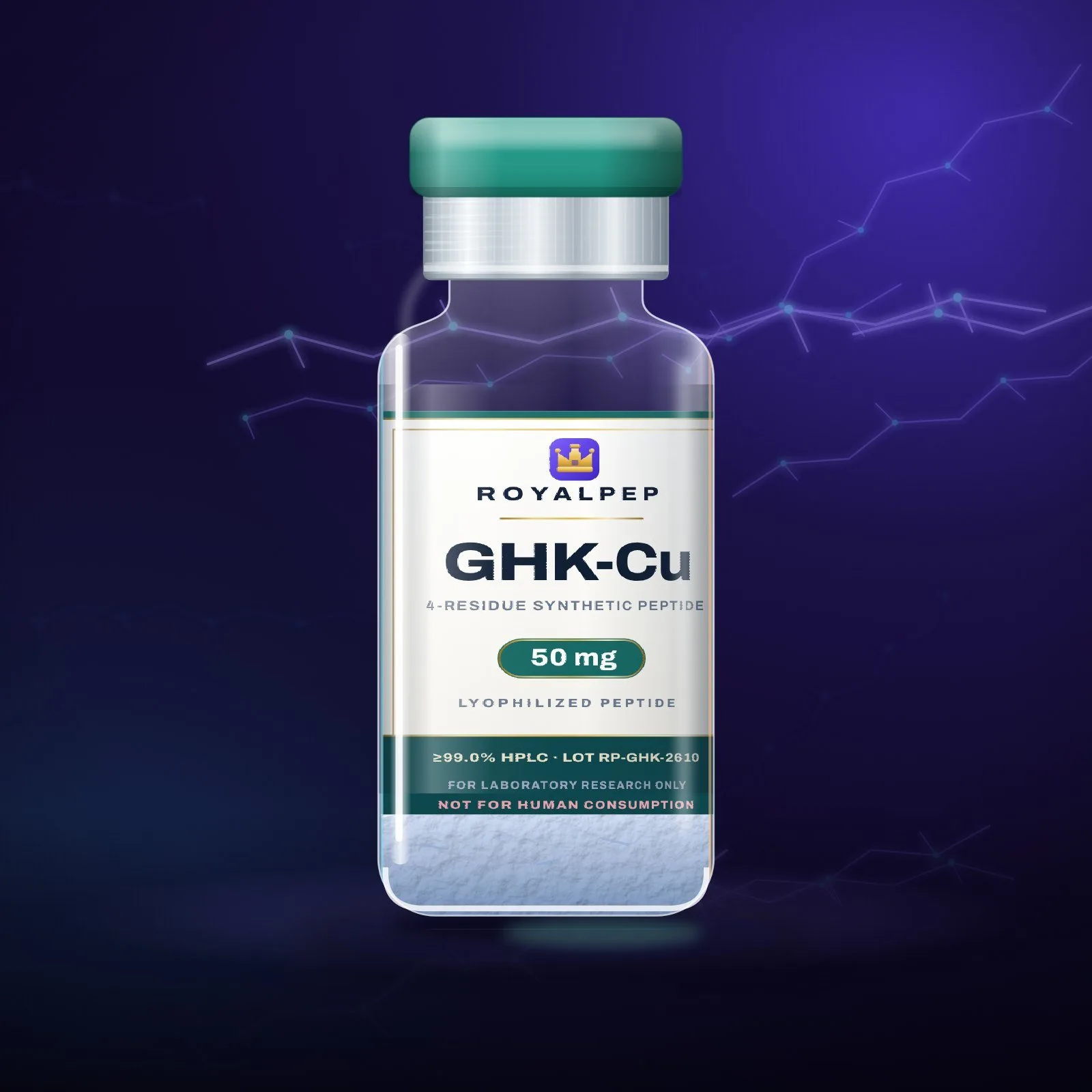
The lyophilized powder is blue, as expected for the copper complex.
Related products
-
Repair & Regeneration
BPC-157
5 mg10 mg
From $48.00 Choose size This product has multiple variants. The options may be chosen on the product page -
Repair & Regeneration
TB-500 (Thymosin β4 fragment)
5 mg10 mg
From $52.00 Choose size This product has multiple variants. The options may be chosen on the product page