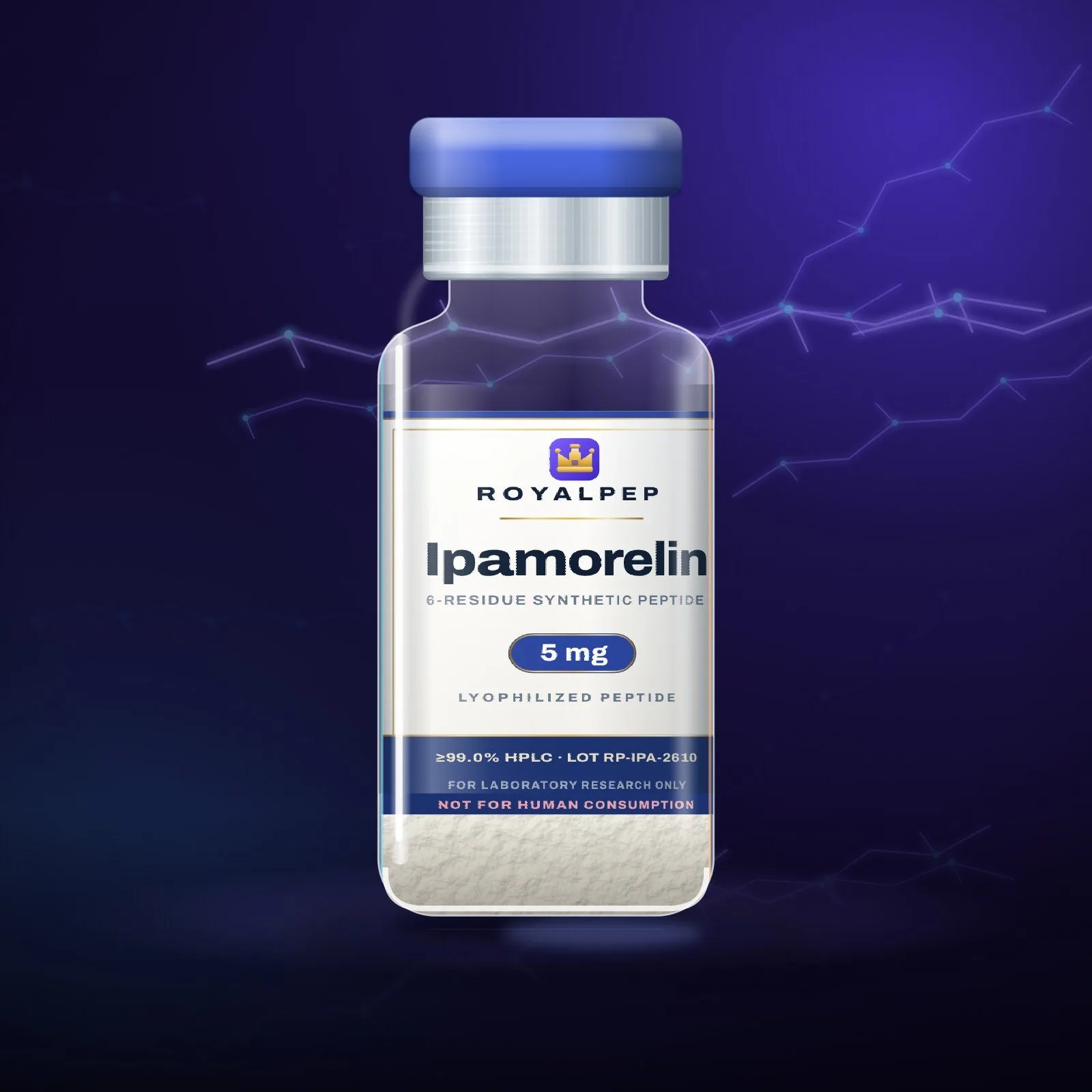
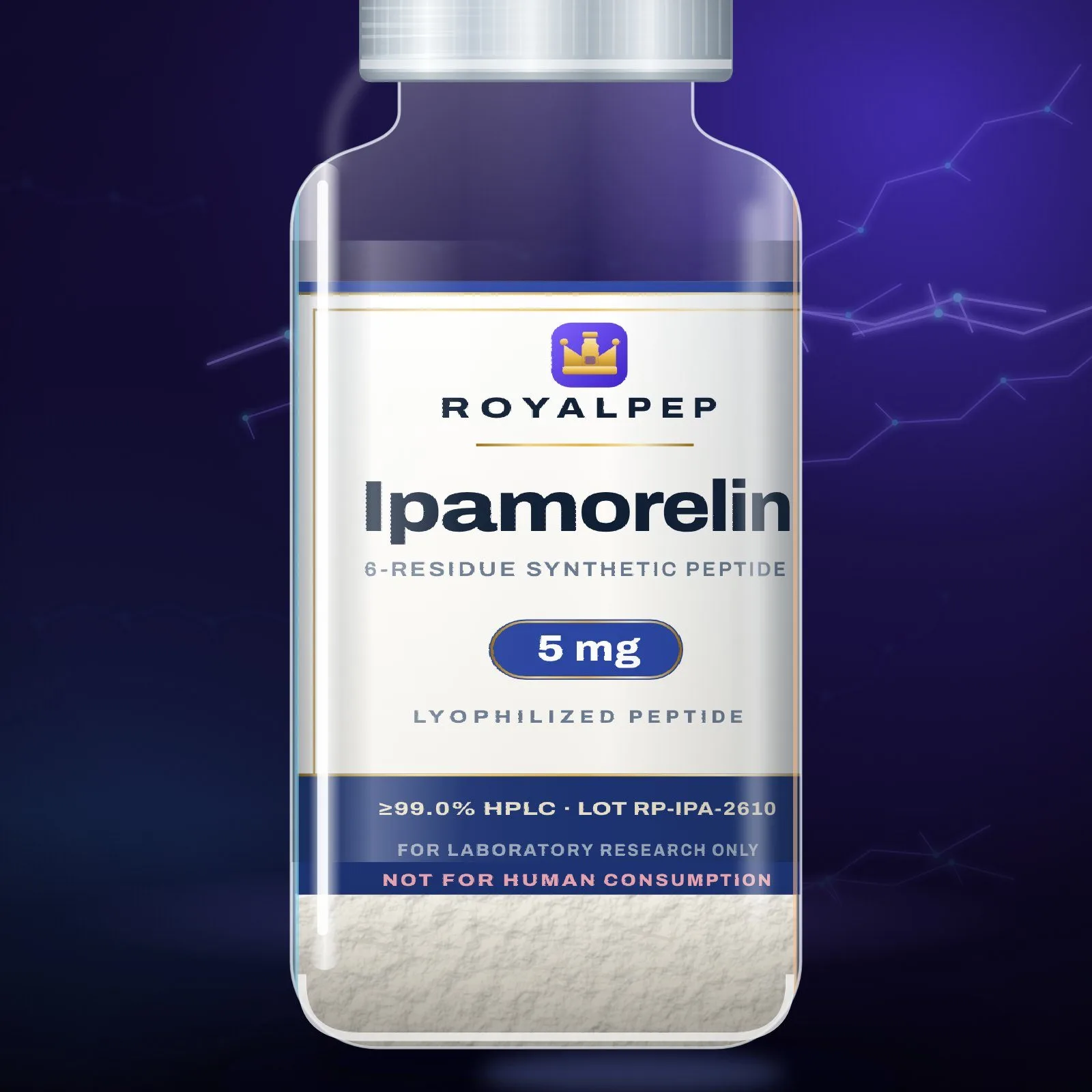
Ipamorelin
C38H49N9O5711.85 g/mol
From $44.00
Best value: $7.20 per mg
A selective pentapeptide agonist of the ghrelin receptor (GHS-R1a).
Buy more, save more
Applies to any mix of sizes of this compound. Discount shows in your cart.
- Batch RP-IPA-2610, lab report sent on request
- Sealed vial, discreet unbranded packaging
- Order now and it ships on Monday
For in-vitro laboratory research only. Not for human or veterinary use.
Structure
- Hydrophobic
- Polar
- Acidic
- Basic
- Modified / non-standard
Specifications
| Also known as | NNC 26-0161 |
|---|---|
| Sequence | Aib-His-D-2Nal-D-Phe-Lys-NH₂ |
| Molecular formula | C38H49N9O5 |
| Molecular weight | 711.85 g/mol |
| CAS number | 170851-70-4 |
| Purity specification | ≥99.0% (HPLC) |
| Form | Lyophilized powder, 3 mL glass vial |
| Storage | −20 °C, sealed, protected from light |
Stock solution calculator
Work out the concentration of an in-vitro stock solution from the vial contents and the solvent volume, using this compound’s molecular weight.
- Mass concentration
- –
- Molar concentration
- –
- Amount of substance
- –
Uses MW 711.85 g/mol and gross fill weight. For quantitative work, correct for net peptide content.
Batch history
Every batch we have released for this compound, with the report for each. Older reports stay available so you can compare lots.
-
RP-IPA-2610 Shipping now
Request report
Research overview
Ipamorelin is a synthetic pentapeptide growth hormone secretagogue developed in the late 1990s. It contains non-standard residues, including aminoisobutyric acid (Aib) and D-2-naphthylalanine, and a C-terminal amide.
In early pharmacology studies it stimulated growth hormone release in animal models through the ghrelin receptor (GHS-R1a), with notable selectivity: it showed little effect on ACTH or cortisol release compared with earlier secretagogues. It remains a common tool for studying GHS-R1a signalling.